
A House with a Need for Speed: Darroch Learg's Connection to the Early Days of Motor Racing
At first glance, Darroch Learg is a house steeped in the traditional charm of the Scottish Highlands. Built in 1888, its story is one of country house living, changing generations and the enduring appeal of the Cairngorms. Yet, among its former owners was a man whose interests took him far beyond the Scottish hills – into the fast-moving, adventurous world of early motor racing.
That man was Joseph Tucker Burton-Alexander, a wealthy young heir, railway enthusiast, powerboat racing patron and amateur racing driver who became involved in some of the pioneering motor racing events of the early twentieth century.
His story brings an unexpected dimension to Darroch Learg's history: a connection between a Highland country house and an age when speed, engineering and adventure were capturing the imagination of Europe.
An inheritance and a passion for speed
Darroch Learg was built for the Burton-Alexander family in 1888. Joseph Tucker Burton-Alexander was born on 17 July 1879, the son of Reverend William Burton-Alexander, a Church of Scotland minister at Crathie, and Mary Tucker.
Educated at Edinburgh Academy, Joseph went on to Trinity College, Cambridge, in 1898. Following the death of his mother in 1903, he inherited the family's estates, including Darroch Learg and the substantial Pavenham Manor estate in Bedfordshire, in 1904.
Still only 25, he found himself with considerable wealth and the freedom to pursue a remarkable range of interests. His enthusiasm for speed and mechanical innovation was already well established.
He was a keen railway observer, particularly fascinated by long-distance non-stop journeys and railway speed records. He published letters in The Times in 1900 and 1902 and went on to write a book, Runs in Three Continents. He was also involved in cycling circles, contributing to discussions around the Tour de France.
But it was the emerging world of motorised transport that would become one of his most expensive passions.
The pioneering days of motor racing
At the beginning of the twentieth century, motoring was still in its infancy. Cars were developing rapidly, manufacturers were experimenting with new engines and designs, and competitive racing was becoming an important way to demonstrate engineering prowess.
For wealthy enthusiasts such as Burton-Alexander, motor racing offered an intoxicating combination of adventure, technology and competition.
Competing under the name Alexander Burton, he became involved in international motor racing, driving for the French manufacturer Mors in the 1904 Ardennes Circuit.
The following year, he entered one of the most prestigious events of the era: the Gordon Bennett Cup.
The 1905 Gordon Bennett Cup, held on the Circuit d'Auvergne in France, brought together competitors representing different nations and manufacturers. Burton-Alexander entered in a Mercedes, carrying race number 17.
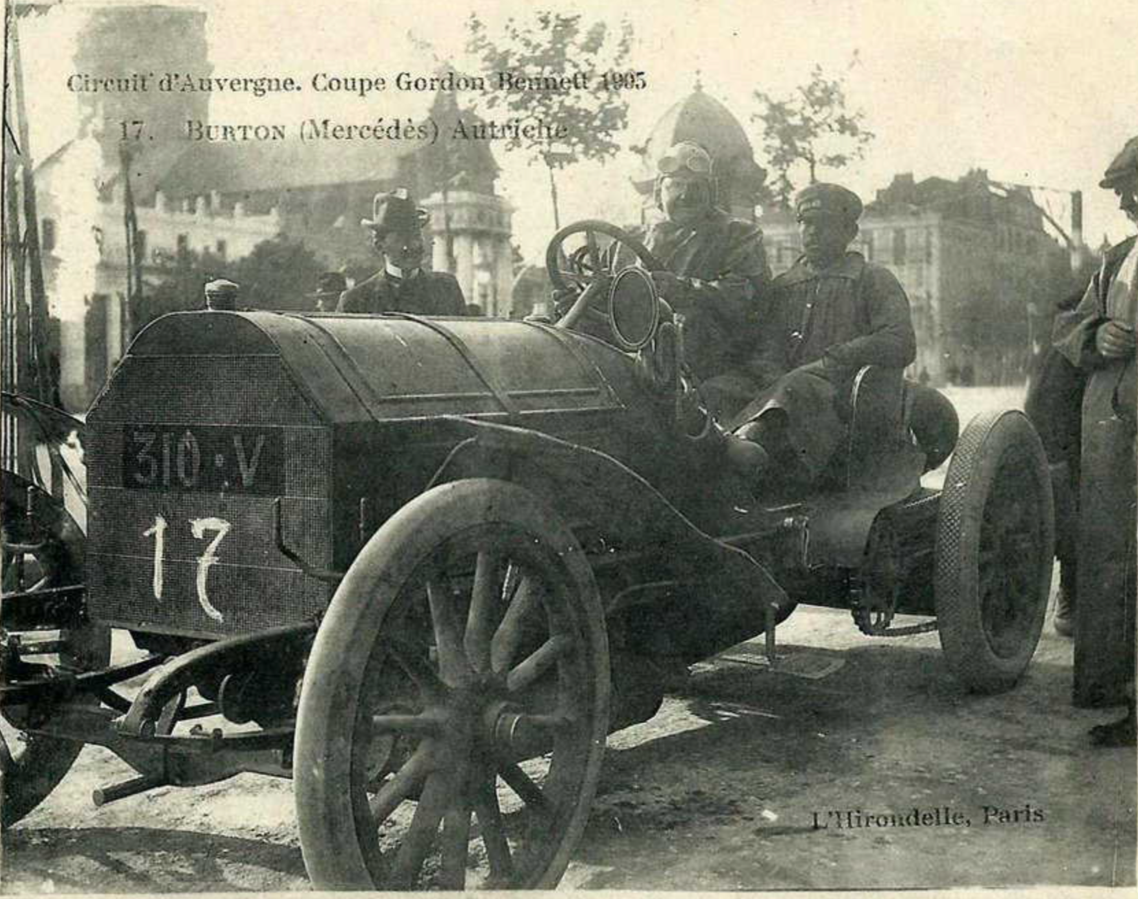
Joseph Tucker Burton-Alexander competed as “Alexander Burton”. His Mercedes carried number 17 in the 1905 Gordon Bennett Cup.
Although he did not finish the event, his participation placed him among the adventurous privateer drivers who helped shape the earliest years of international motor sport.
He also raced cars from manufacturers including Mercedes and Gobron-Brillié. The latter was particularly significant in motoring history, having produced the first car to exceed 100 miles per hour.
Burton-Alexander was not remembered as one of the great champions of the sport. Rather, he was a wealthy and enthusiastic amateur, determined to be part of an exciting new world in which mechanical ingenuity and sheer speed were pushing boundaries.
Beyond the racetrack: a passion for powerboats
His enthusiasm for speed was certainly not confined to roads.
Alongside motor racing, Burton-Alexander became a prominent figure in the early powerboat racing scene around Cannes on the French Riviera.
In the early 1900s, motorised boats, often referred to as 'auto-boats', represented another frontier of mechanical innovation. Combining newly developed petrol engines with traditional boat hulls, these vessels were tested and raced in gatherings that attracted wealthy enthusiasts, engineers and manufacturers.
Cannes and nearby Monaco became important venues for these early motorboat meetings, where speed, engineering and spectacle came together in the fashionable surroundings of the Belle Époque Riviera.
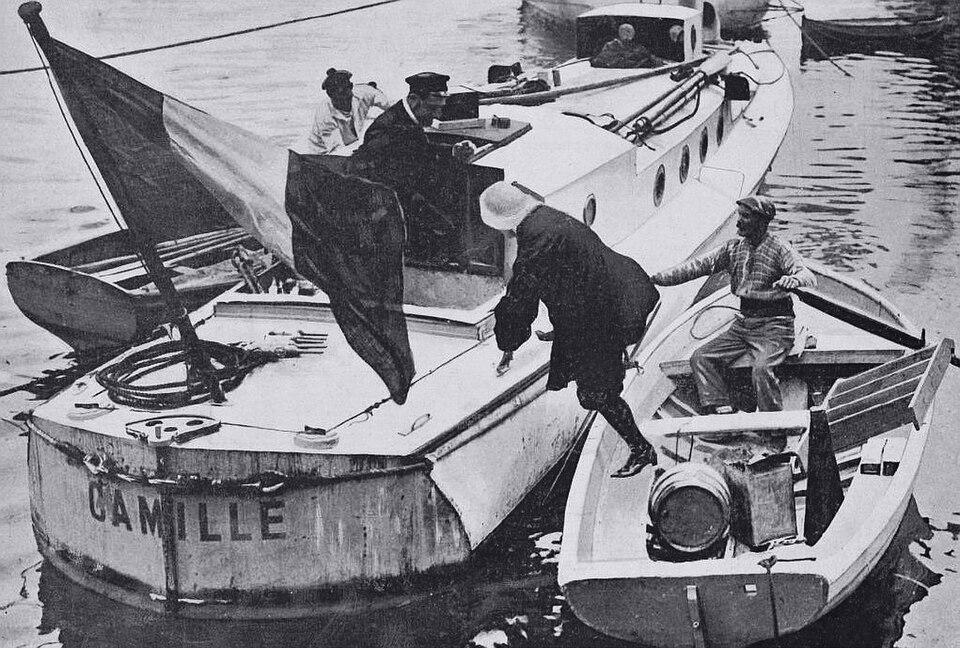
The C.G.V., owned by M. de Jessé, was among the motorboats featured in Fernand Forest’s 1906 account of the emerging sport. It illustrates the pioneering powerboat-racing scene in which J. T. Burton-Alexander was an enthusiastic patron and competitor.
Burton-Alexander was among the sport's keen supporters. His involvement extended beyond simply competing and enjoying the boats: he donated and lent his name to a competition prize known as the Alexander Burton Trophy, helping support the development of this emerging sport.
It was a fitting reflection of his interests. Whether on railway lines, roads or water, he was fascinated by the possibilities of speed and the machines that made it possible.
The cost of living life in the fast lane
For all the excitement, these pursuits came at a considerable financial cost.
Burton-Alexander had inherited the Pavenham Manor estate intact, but his expensive interests – including continental motor racing, powerboats and railway excursions – placed increasing pressure on his finances.
By 1909, mortgages against the estate had reportedly reached £39,000, an extraordinary sum for the period. The financial strain forced the sale and breakup of much of the Pavenham estate.
The grand house, Pavenham Bury, and its Home Farm eventually passed into separate ownership in 1919.
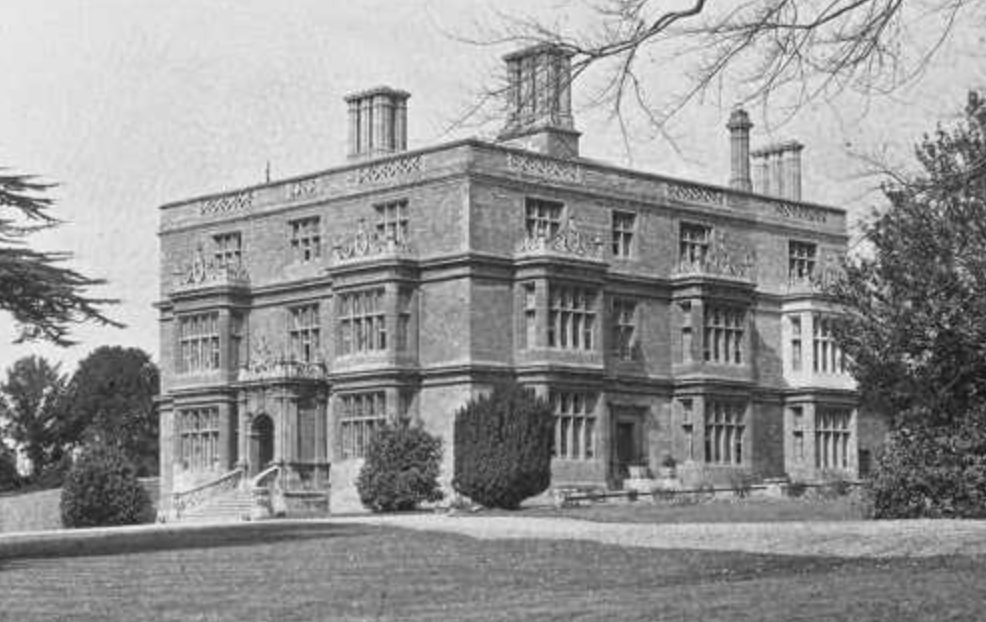
Pavenham Bury, the Burton-Alexander family’s country house, as extended in the late 19th century. Image: Matthew Beckett.
Darroch Learg was also sold in 1919, passing into the ownership of Dr Sir Alexander Hendry.
And so, a chapter in the house's history came to an end. Its former owner had left behind a story that was about much more than land and property: it was the story of a man captivated by the dawn of modern transport, and prepared to spend his fortune pursuing it.
A little-known chapter in Darroch Learg's story
Today, Darroch Learg offers a very different pace of life from the world of early motor racing. Set in the beautiful surroundings of the Cairngorms, it is a place to slow down, enjoy the landscape and appreciate the character and history of a much-loved Scottish country house.
Yet the story of Joseph Tucker Burton-Alexander adds an intriguing twist to that heritage. More than a century ago, one of the house's owners was taking part in pioneering motor races, supporting early powerboat competitions and following railway speed records – all at a time when the modern world of transport was only just beginning to take shape.
It is a reminder that the history of a house is not simply written in its walls. It is shaped by the people who lived there, the lives they led and the ambitions they pursued.
And at Darroch Learg, that history includes a rather unexpected need for speed.